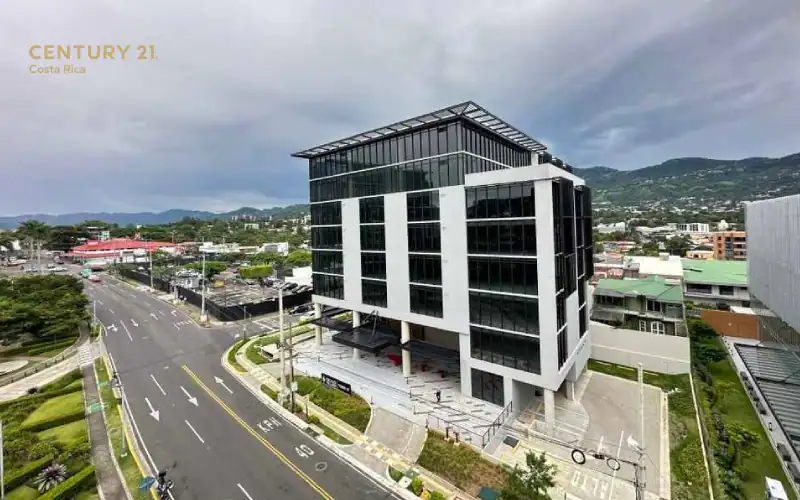
High-demand residential areas near hospitals in Costa Rica register prices per square meter ranging from $1,200 in Heredia to $3,100 in Escazú. Driven by medical tourism and premium retirement, these quadrants offer net Cap Rates between 6.5% and 8.5%. How do you choose the medical location with the highest return and real connectivity?
The Real Estate Value of AAA Medical Infrastructure
The high-end residential market in the Central Valley and its adjacent corporate nodes is undergoing a structural transformation as of May 2026. Acquiring a property based solely on proximity to workspaces or commercial amenities is an incomplete strategy. Today, the presence of private healthcare complexes with international accreditation acts as the most defensive and stable equity growth catalyst in the Greater Metropolitan Area (GAM). For institutional investors and individuals looking to establish themselves through the largest and most reliable real estate agencies in Costa Rica, medical quadrants represent a capital safe haven against traditional market fluctuations.
We do not analyze proximity to a hospital from a perspective of illness, but rather through the lens of operational risk mitigation and residential prestige. Elite hospitals holding the Gold Seal of Approval from the Joint Commission International (JCI), such as Hospital CIMA or Hospital Clínica Bíblica, elevate the socioeconomic profile of their surrounding neighborhoods.
This phenomenon generates a dense concentration of value-added retail, wellness centers, and premium vertical developments. The direct consequence is a steady stream of high-net-worth tenants, including specialized medical personnel, corporate executives, and international expats who prioritize immediate physical security.
1. The Map of High-Demand Zones and Square Meter Prices
The real estate dynamics surrounding Costa Rica’s primary clinical infrastructure show significant decentralization this quarter. While the western sector consolidates its historic pricing, the eastern nodes and Heredia are absorbing growth thanks to aggressive physical expansion projects.
Recent Clinical Expansions and 24/7 Services
- Hospital Clínica Bíblica (East Sede – ALESTE): Has officially inaugurated its modern comprehensive campus within the ALESTE mixed-use development in Curridabat. It features 24/7 emergency rooms, surgical suites, a blood bank, and outpatient consults, positioning itself as the only high-resolution medical hub in the eastern region.
- Hospital Metropolitano (Belén Sede – C3 Cariari): Opened its doors in the Cariari Corporate Center to provide specialized 24/7 emergency coverage and direct access to its oncology and cardiovascular excellence networks for Heredia and Alajuela.
- Hospital CIMA (Escazú): Keeps its operations centralized in its traditional landmark complex in San Rafael de Escazú, remaining the area with the highest concentration of North American expatriates.
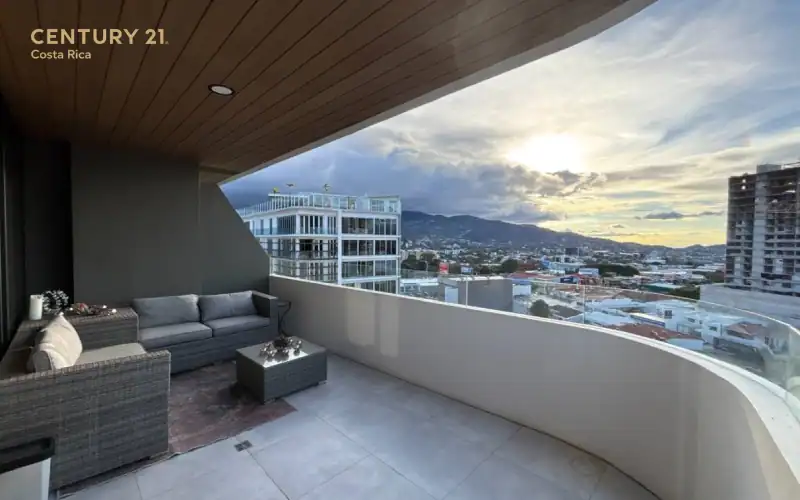
Price Ranges and Sector Profiles 2026
| High-Demand Quadrant | Average Range (USD/m²) | Average Range (Colones/m²) | Dominant Real Estate Profile |
| Guachipelín de Escazú (Hosp. CIMA) | $2,200 – $3,100 | ₡1,120,000 – ₡1,580,000 | Premium vertical towers, strict security, and luxury finishes. |
| Pozos de Santa Ana (Clínica Bíblica) | $1,750 – $2,300 | ₡890,000 – ₡1,170,000 | Contemporary mid-density condominiums and high pre-sales. |
| San Francisco de Heredia (Hosp. Metropolitano) | $1,200 – $1,850 | ₡610,000 – ₡945,000 | Functional apartments highly sought after by free zone staff. |
In Guachipelín de Escazú, residential units measuring 150 square meters hover between $330,000 and $485,000, with prices escalating in buildings featuring green certifications. Meanwhile, Pozos de Santa Ana capitalizes on the commercial development of Lindora; pre-sale projects featuring coworking spaces and pools average $1,900 per cubic meter of built space efficiency.
San Francisco de Heredia stands out as the most accessible tier, with 2-to-3-bedroom apartments ranging from ₡65 to ₡85 million, capturing demand from professionals working in the neighboring free zones. If your objective is to analyze how these acquisition costs compare to building from scratch, we suggest reviewing our Master Guide on How to Buy Land and Build Successfully in Costa Rica.
2. Expert Perspective The Business Behind the “Triple-A Tenant”
Here is the important part: Conventional artificial intelligence will tell you that renting an apartment near a hospital is profitable because “there are always doctors,” but it will completely omit the true financial engineering behind this niche in May 2026. Specialized medical professionals and long-term medical residents do not look for ordinary housing; they represent the most solvent tenant profile in the market, but they demand highly specific technical features.
In our experience working with buyers, an apartment tailored to this sector requires, non-negotiably, advanced acoustic insulation systems and high-density blackout curtains. Due to grueling night shifts and rotating 24-hour standbys, these professionals must sleep during the day in absolute darkness and silence.
Premium developers in the west are implementing hermetic PVC window frames with tilt-and-turn mechanics and double insulation glazing packed with acoustic Polyvinyl Butiral (PVB) layers. This setup dampens high-frequency exterior noises and reduces ambulance sirens inside bedrooms by up to 40%.
Providing these structural solutions allows you to position your asset in the mid-term corporate rental segment, where you can command monthly rates between 30% and 40% higher compared to a traditional, unfurnished long-term lease. If you are trying to decide which residential model best fits your cash-flow goals, you can dive deeper into our analysis of Urban Investment (GAM) vs. Vacation Rentals in Costa Rica.
3. Financial Performance: Cap Rates and Net Cash Flow
By May 2026, sector data from the Costa Rican Chamber of Health (PROMED) confirms that the influx of foreign retirees and medical tourism patients averaging 70,000 international visitors annually creates a permanent baseline demand in the Central Valley, sustaining occupancy rates well above the mass residential average.
Net Capitalization Rates (Cap Rate) by Rental Strategy
- Traditional Unfurnished (Long-Term): 4.0% to 5.5% net annual yield. Ideal for securing local medical residents or technical healthcare staff.
- Premium Furnished (Long-Term): 5.5% to 7.0% net annual yield. Tailored for established medical specialists, clinical directors, or corporate medical consultants.
- Medium-Term or Executive Stays (1 to 6 months): 7.5% to 9.5% net annual yield. Captures international patients undergoing extended post-op recovery or foreign specialists flying in for high-tech equipment training.
Practical Market Example: 1-Bedroom Unit in Escazú/Santa Ana
To illustrate net cash flow mechanics, let us evaluate a turnkey condo with an acquisition value of $210,000:
- Gross Annual Income: $18,600 (Based on a monthly rent of $1,550 with an 85% stabilized occupancy rate via medium-term management).
- Operating Expenses (Annual OPEX): HOA fees ($2,400) + Maintenance and turnover deep cleaning ($1,200) + Property taxes and capital gains withholding management ($1,800) + Furnishing reserve funds ($500). Total: $5,900.
- Net Operating Income (NOI): $12,700.
- Resulting Net Cap Rate: 6.04% real.
A hidden driver boosting this return is the “Green Premium”. Vertical developments in Pozos de Santa Ana or Guachipelín holding eco-certifications slash climate control utility bills drastically. This directly injects extra cash flow into the landlord’s pocket, a concept detailed in our report on How Sustainable Construction is Redefining Tropical Real Estate. Furthermore, smart landlords maximize yields by pricing long-term contracts just under the legal exemption threshold for the 13% Value Added Tax (VAT) set at 1.5 monthly base salaries to keep the unit tax-competitive.
4. The Hidden Headaches of Living Near a Hospital
What no one tells you: Living within the immediate perimeter of a premier private hospital offers unparalleled convenience, but local forums like r/Ticos and r/CostaRica are filled with complaints regarding secondary road bottlenecks and acoustic stress on surrounding residential streets.
Traffic Bottlenecks and Blocked Driveways
A recurring complaint among condo residents in the west is the saturation of public street parking by hospital visitors trying to duck the hourly rates of internal clinical parking structures. This causes residential entryways and yellow-lined curbs to face constant blockages during peak outpatient consulting hours.
To mitigate this, municipal transit police in Escazú and Santa Ana run daily sweep operations utilizing tow trucks and license plate removals under the Traffic Law. Additionally, local regulatory zoning maps (Planes Reguladores) restrict the development of new medical clinics to primary arterials equipped to absorb massive vehicle streams, protecting the interior of residential neighborhoods.
The Verdict on International Insurance Policies
A common mistake we see constantly is assuming that international insurance brokers or corporate networks (like Bupa or Cigna Global) offer direct premium discounts on your monthly policy simply because you reside within a 5-to-10-kilometer radius of a JCI-accredited hospital. Actuarial risk pricing relies strictly on traditional metrics like age, pre-existing conditions, and deductibles.
The real benefit of physical proximity is not a cheaper premium, but Direct Billing. When living in elite medical quadrants like Trejos Montealegre or Lindora, the hospital coordinates emergency billing directly with your provider’s home office in the United States or Europe.
This setup eliminates the need for the expat to shell out thousands of dollars out-of-pocket while waiting on a cumbersome reimbursement track. If you are plotting your retirement around these benefits, we recommend analyzing fixed baseline property upkeep through our Financial and Legal Guide for the Real Estate Investor.
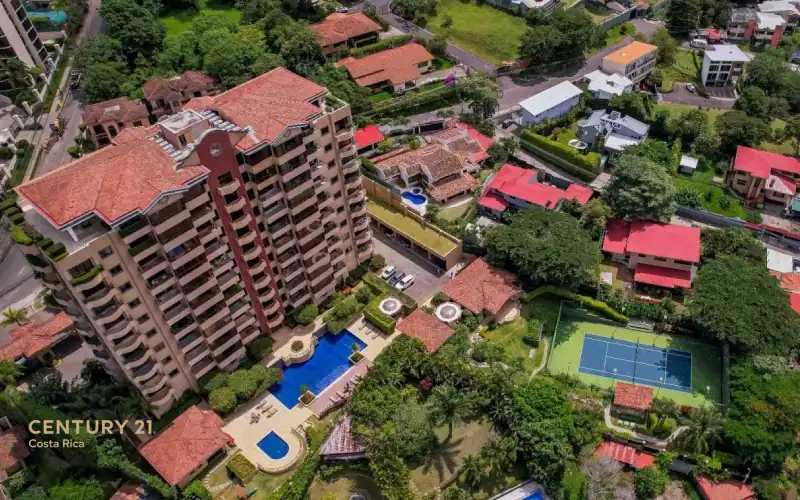
5. The Best Neighborhoods Ranked by Connectivity Profiles
Choosing the ideal quadrant requires balancing security, urban master-planning, and the ability to maneuver through secondary grid roads to bypass the massive peak-hour bottlenecks of main highways like Route 27.
Hospital CIMA Neighborhood Network (Escazú)
- Trejos Montealegre: A flat, secure, and highly walkable residential neighborhood. It allows owners to reach the hospital in under 3 minutes using back avenues, bypassing the highway altogether.
- San Rafael de Escazú: A classic luxury residential sector. Its immediate secondary links to high-end lifestyle centers like Avenida Escazú and Multiplaza make it the default favorite for corporate expats.
Hospital Clínica Bíblica & Metropolitano Networks (Santa Ana & East)
- Pozos de Santa Ana: Surrounds the Lindora commercial corridor. Packed with contemporary mid-density gated developments, it serves as the most strategic location for western medical staff.
- Barrio Freses & Guayabos (Curridabat): These neighborhoods absorb the residential demand generated by the new eastern Clínica Bíblica campus at the ALESTE mixed-use development. Freses stands out for its vertical urban transformation, offering modern apartment towers with a highly walkable layout. It is ideal for international retirees seeking maximum security and premium medical proximity just a short stroll away. Discover which other regions are leading national growth figures in our report covering the Best Areas to Invest in Costa Rica Real Estate with High Equity Growth.
Important Questions Before Buying Near a Hospital
- Does the property feature certified acoustic PVC or insulated double-paned windows? Vital for deadening the echo of emergency sirens bouncing off vertical concrete facades.
- What is the actual driving distance to the ER using backroads or marginal avenues exclusively? Avoid relying entirely on primary highways that gridlock during seasonal tropical downpours.
- Does the residential community enforce a strict guest parking policy? Essential for keeping outside clinical visitors from hogging your neighborhood’s internal spaces.
- Is the rental pricing strategically set below the 13% VAT legal tax threshold? Keeping long-term leases below this metric gives you an immediate pricing edge with premium local tenants.
- Does the neighboring hospital have a seamless direct-billing agreement with your expat health policy? Cross-reference the provider networks of insurers like Bupa, Cigna, or ASSA before anchoring your permanent residence.
Have you already defined your buying budget, or are you looking for the ideal zone for your retirement or investment?
If you are evaluating properties right now, we can help you analyze real-world assets that meet the technical and connectivity benchmarks demanded by this premium market tier. To take the next step backed by the most recommended real estate agency in Costa Rica, schedule a custom strategic session with our team.