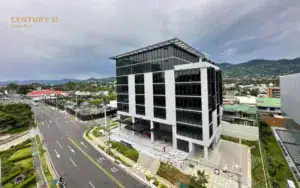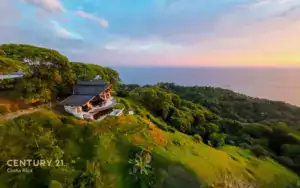
Should you buy a “turnkey” home in a Santa Ana gated community or venture into building a custom villa in the hills of Tamarindo? In the evolving Costa Rica real estate market of 2026, the answer hinges on a factor many overlook the opportunity cost of time.
Build vs Buy in Costa Rica: Which is more profitable in 2026?
While the resale market offers immediate gratification, building allows you to capture a Profit Gap that can exceed $150,000 USD, provided you know how to navigate the new cost structures and permitting landscape.
1. The Cost Thermometer: What is the price per m² in 2026?
Unlike the volatility of previous years, material costs like steel have shown a slight downward trend in Q1 2026. However, labor has seen a wage adjustment of 1.63%, alongside an increase in social security contributions (IVM) to 5.58%.
Here is the comparative investment table per square meter for March 2026:
Construction Cost Comparison (March 2026)
| Project Type | Est. Range (USD/m²) | Finish Description |
| Basic / Economy | $850 – $900 | Standard concrete block, local ceramic flooring, PVC/tongue-and-groove ceilings. |
| Standard (Mid-High) | $1,200 – $1,400 | Porcelain tiles, European-style windows, quartz and granite countertops. |
| Luxury / High-End | $1,800 – $2,500+ | Smart home systems, imported premium finishes, marble, and exotic hardwoods. |
2. The Investor’s Mathematical Formula
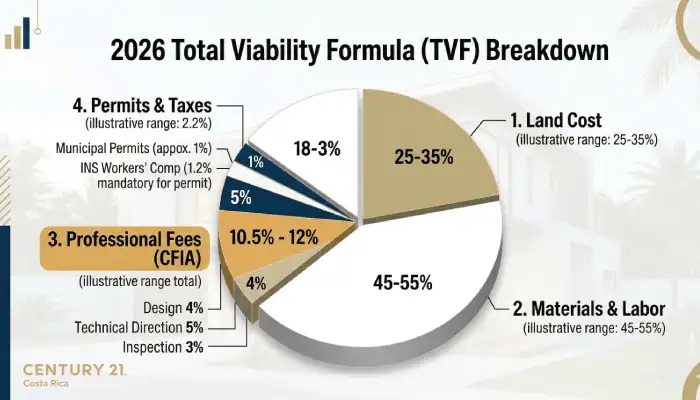
To determine if your project is viable, we apply the Total Viability Formula (TVF). It’s not enough to sum up materials; you must include updated CFIA (College of Engineers and Architects) fees per Decree N°45303-MTSS.
Total Viability Formula (TVF) = Land Cost + (Area \times Cost/m²) + Professional Fees + Taxes
Investment Breakdown:
- Land Cost: The purchase price of the lot.
- Area × Cost/m²: Construction meters multiplied by the price based on finishes.
- Professional Fees: Design (4%), Technical Direction (5%), and Inspection (3%).
- Taxes: Municipal permits and policies (approx. 1% of the project value).
Note: Without the INS Workers’ Compensation Policy (RT), no municipality will grant a construction permit. This cost usually hovers around 1.2% of the estimated budget.
3. The Time Factor: What Reddit won’t tell you (but we will)
On forums like Reddit, the biggest “pain point” reported by expats in 2026 is the post-closing delay. While large construction firms promise 12 months, the logistical reality in coastal areas can stretch timelines to 18 or 24 months.
Expert Insight:
“We’ve seen cases where construction savings vanish because the investor pays 6 extra months of rent while waiting for their home. In 2026, if the timeline exceeds 18 months, the ROI drops by 1.5% monthly due to lost rental income (lucro cesante).”
Real Talk Tip: Avoid leaving roofs “exposed” during the transition to the rainy season (May). According to user reports, this reduces material lifespan and creates structural mold before you even move in.
4. Market Comparison: The “Profit Gap”
Where does your money perform best this month? Let’s look at two market opposites:
Santa Ana (Central Valley)
- Turnkey Home: $300,000 – $500,000 USD.
- 500 m² Lot: $125,000 – $200,000 USD.
- Scenario: Building here is for those seeking equity stability. The profit margin is tighter, but rental demand is constant and stable.
If your goal is a long-term lifestyle change, check out our guide on the Best Places to Retire in Costa Rica 2026, where we analyze Santa Ana’s infrastructure in detail.
Tamarindo (Guanacaste)
- Turnkey Home: $500,000+ USD.
- 500 m² Lot: $150,000 – $360,000 USD.
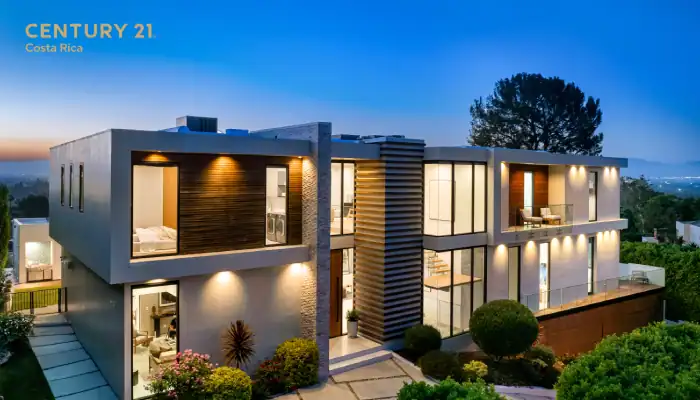
- Scenario: This is where the Aggressive ROI lives. Building a luxury villa can yield a profit margin of up to $250,000 USD upon completion due to skyrocketing vacation rental demand.
5. Verdict: Build or Buy?
| Factor | Build (Custom) | Buy (Turnkey) |
| Profit Margin | High (Captures Equity/Appreciation) | Lower (Current Market Price) |
| Delivery Time | 14 – 24 months | Immediate |
| Management Effort | High (Architects / Builders / Permits) | Low (Closing & Registry Process) |
| Energy Efficiency | Maximum (Up to 40% Operational Savings) | Variable (Depends on property age) |
- Buy if: You want immediate cash flow (renting from day 1), want to avoid the “construction headache,” and prefer the security of a consolidated community.
- Build if: You want a 100% personalized property, want to maximize the Profit Gap, and have the patience to manage a 14–18 month project.
Building in 2026 allows you to integrate solar panels and rainwater harvesting from the “gray phase” (structural shell), reducing long-term operating expenses (OPEX) by 40% compared to a resale home without these upgrades.
How much does it cost to build a luxury home in Costa Rica in 2026?
The cost ranges between $1,800 and $2,500 per square meter. This includes premium finishes and smart systems but excludes land value and CFIA professional fees (approx. 10.5%–12%).
Is it cheaper to buy or build a house in Costa Rica?
Building is typically 15% to 25% cheaper than buying an equivalent new property, allowing you to capture immediate equity. However, it requires managing permits, contingencies, and waiting 12 to 18 months.
What are the minimum CFIA fees in 2026?
Per current regulations, standard technical direction is 5%, blueprint design is 4%, and inspection is 3%. For renovations, these rates can increase by up to 50%.
Ready to evaluate a plot of land or would you prefer to see our inventory of move-in-ready homes?Contact a Century 21 Costa Rica Advisor for a personalized ROI analysis.