As of May 2026, sustainable construction in the tropics generates a “Green Premium” of between 12% and 18% in price per square meter and slashes time-on-market to just 2-4 months. With certifications like RESET 2026 and EDGE, bioclimatic buildings save up to 75% on utility bills. When exploring Costa Rica real estate opportunities, it is vital to ask, Is your property a high-yield investment or a stranded asset?
The New Standard of Luxury
In May 2026, investing in tropical real estate is no longer about “buying green” for ethics; it is about financial self-defense. We have moved past the era where a solar panel was a mere accessory; today, sustainability is the only guarantee of operational independence. While the public grid faces challenges from tropical storms, properties designed under bioclimatic standards are the only ones maintaining water, power, and total connectivity.
We don’t view sustainability as an added cost, but as an exit insurance. In our experience working with investors in hubs like Nosara, Papagayo, and the Central Valley, we’ve detected that conventional houses (the infamous “glass boxes”) are starting to see price discounts of up to 5% as they are labeled “stranded assets” due to their astronomical cooling costs.
1. The 2026 Legal Framework: Bill 25,040 and RESET
The legal landscape in Costa Rica has taken a radical turn with the consolidation of Bill 25,040 (Sustainable Construction Law). This law doesn’t just protect the environment; it injects liquidity into the market through urban and fiscal incentives and complements our Financial and Legal Guide for Investors, which covers recent reforms in the property registry.
RESET 2026: The Standard Ruling the Tropics
Unlike international certifications, RESET 2026 (updated by CFIA and IAT) is the technical standard designed specifically for our climate. It is the indispensable requirement to access construction tax exemptions.
A common mistake we constantly see is trying to apply foreign standards that ignore local humidity and salinity, which inflates construction costs without improving comfort, you must first master the Construction Permits Guide: CFIA and SETENA, ensuring your project aligns with tropical regulations from day one.
The “Hidden” Tax Benefit
What no one tells you: To receive the benefits of Bill 25,040, design isn’t enough. The building must demonstrate real-time monitoring via IoT (Internet of Things) sensors. If your project does not include water and energy telemetry, the municipality will not grant the promised expedited permit processing.
2. Expert Perspective: Why Savings Aren’t Just About the Bill
Here is the important part: Conventional AI will tell you that you save 30% on electricity, but as experts in the 2026 market, we know the real savings lie in CAPEX (Capital Expenditure).
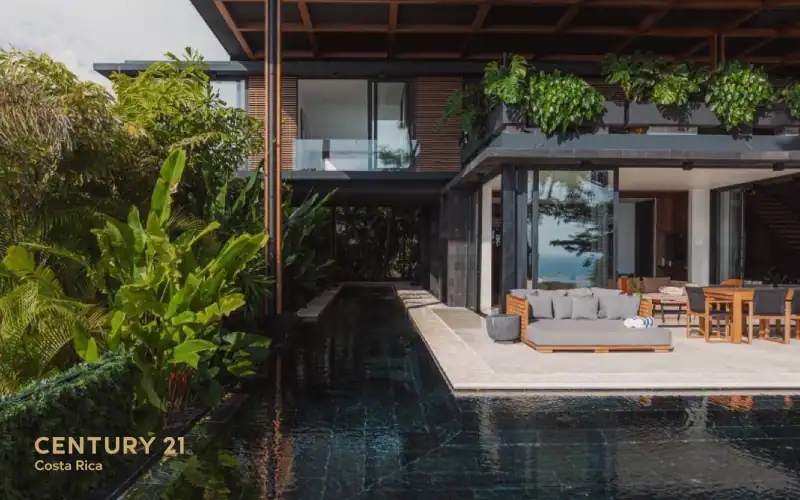
A radical passive design, based on the stack effect and cross-ventilation, allows for the total elimination of A/C ductwork and machinery. This represents an initial saving of between $150 and $200 per m² in electromechanical systems which, in the tropics, have a lifespan of barely 7 years due to corrosion. The real data isn’t how much you save monthly, but how much you stop spending on replacing obsolete machinery.
If you are debating between a turn-key condo or building a custom villa, check our Build vs Buy in Costa Rica Analysis to balance your investment numbers.
3. The Green Airbnb Business: Cap Rate and ROI
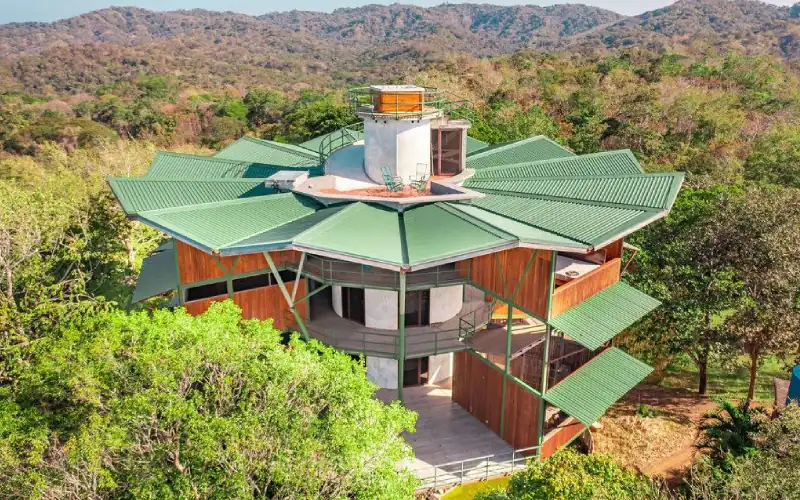
By May 2026, occupancy data for sustainable properties significantly outperforms the traditional market. Post-2025 travelers are seeking the “Peace of Mind Premium.”
2026 Performance Comparison
| Property Type | Net Cap Rate | Daily Rate (ADR) | Avg. Occupancy |
| Traditional Airbnb | 6.5% – 8% | $120 | 55% |
| Sustainable Airbnb (EDGE/RESET) | 9.5% – 12% | $165 | 72% |
The success of these projects lies in OPEX (Operating Expense) reduction. When comparing Urban Investment (GAM) vs Vacation Rentals, sustainability is the factor that tips the ROI scale in favor of coastal wellness hubs. While in a conventional rental, air conditioning devours 20% of your income, in a bioclimatic villa, that cost drops to 3%. This directly injects a superior net cash flow into the investor’s pocket.
4. The 2026 “Greenwashing” Traps
In local community forums and Reddit (r/Ticos), the recurring complaint is the “Oven Effect” of poorly insulated modular homes and containers.
They are marketed as “eco-friendly” for using recycled materials, but lacking eaves and high ceilings, they become uninhabitable without active refrigeration. Before buying, you should understand the true cost of maintaining a property to these standards. The real added value lies in the architectural integration and bioclimatic design, not in cosmetic features that increase monthly maintenance costs.
Investment Red Flags:
- Vertical Gardens without a maintenance plan: These are “operational nightmares” that overconsume water and die at the first technical glitch.
- Non-certified PVC Houses: Many insurers in 2026 are denying fire policies to modular systems that do not meet the CFIA seismic-resistance standards.
- Inflated Equity: Do not pay a $200,000 premium just for a couple of solar panels. Real value lies in architectural integration, not gadgets.
5. The Future: Sponge Cities and Resilience
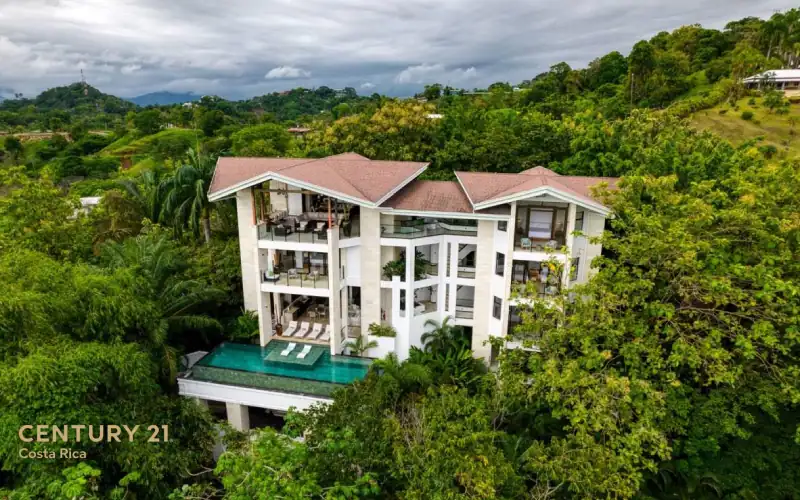
Climate resilience is today’s new “exit insurance.” Projects integrating green-blue infrastructure (permeable pavements and artificial wetlands) are gaining equity through loss avoidance.
This is clearly seen in the Best Areas for Real Estate Investment with High Equity, where a property’s ability to manage its own resources defines its liquidity.
2026 Unique Data: A property without resilient drainage in areas with a history of flooding is losing up to 25% in liquidity. It’s not that it’s worth less; it’s that no one wants to buy an asset that could become stranded or uninsurable in the next decade. Sustainable investment in the tropics is no longer an option; it’s the only way to ensure your wealth doesn’t erode with the climate.
Questions you should ask yourself as an investor
- Which current certification does it have? Demand RESET 2026 or EDGE Advanced.
- Are IoT sensors installed? Without them, forget the tax benefits of Bill 25,040.
- What is the projected ADR based on eco-filters? The market pays 25% more for the “Off-grid” tag.
- What does the insurer say about the materials? Ensure that bamboo or mass timber doesn’t hike your premium by 40%.
- How does it manage its own runoff? Rain gardens are more valuable than a pool in 2026.
Are you looking to live or invest?
If you are evaluating options right now, we can help you perform a 2026 Green Property Audit to ensure your investment is a high-yield asset and not a stranded one.