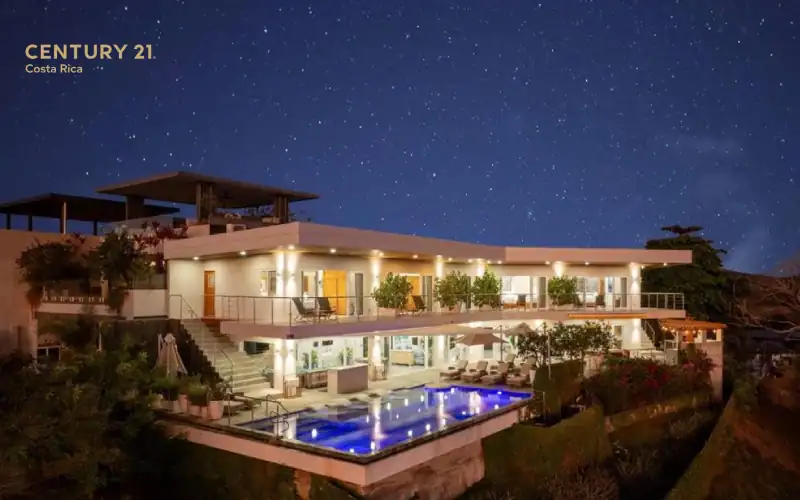
Investing in the Costa Rica real estate market in 2026 requires more than just architectural taste; it demands a bulletproof financial strategy and a deep understanding of recent legal reforms.
From the new Luxury Home Tax thresholds to the modernization of the National Registry, this guide consolidates everything a savvy investor must know to maximize ROI and protect their wealth in the “Pura Vida” land.
The Anatomy of a Secure Property: Due Diligence
Before moving a single dollar, an investor in Costa Rica must understand the concept of Folio Real. This is the property’s “ID number” in the National Registry (Registro Nacional).
- What do we look for in the Folio Real? It’s not just about confirming the seller is the legitimate owner. We check for Anotaciones (pending lawsuits) or Gravámenes (mortgages, easements, or restrictions due to protected zones).
- The Municipal “Visado”: In 2026, having a surveyed plan (plano catastrado) is not enough; it must have the visado from the respective municipality. Without this, you could be buying land where it is legally impossible to build.
Master Insight: At Century 21, we coordinate with engineers to verify that the physical fence boundaries match exactly what is shown on the National Registry’s digital map.

1. Financing Strategy: Capital in 2026
Unlike previous years, access to credit for non-residents has diversified, though it still requires a solid structure.
- Traditional Banks: Institutions like BAC or Promerica offer USD loans with interest rates ranging between 8% and 12% annually. The standard down payment remains between 20% and 40%.
- Private Equity: For quick closings (15–20 days), private lenders handle rates from 10% to 14%. These are ideal for “opportunity deals” that cannot wait for bank processing times.
- Expert Insight: If you are looking for a fixed rate, the INVU remains a competitive option with plans near 7% – 7.5%, although it requires a prior savings phase.
Get all the details on requirements and deadlines in our Financing for Foreigners in Costa Rica Guide.
The Strategic Side of Taxes: Capital Gains
You shouldn’t only worry about what you pay while you own the property, but what you will pay when you sell. In Costa Rica, the Capital Gains Tax is 15% on the net profit.
- The 2.25% Exception: If the property was acquired before the 2019 reform, you have the unique right to choose to pay 2.25% on the total sales price instead of 15% on the profit. This can represent savings of thousands of dollars on long-term investments.
- Habitual Residence: If you live in the property (it is your primary home), you are exempt from this tax upon selling. In 2026, the Tax Administration (Hacienda) is strict about verifying utility bills to grant this exemption.
2. Fiscal Obligations: The Owner’s Calendar
Tax compliance in 2026 is fully digitized through the TRIBU-CR platform. Not being up to date can block the sale of your asset.
The Luxury Home Tax (Impuesto Solidario)
For the 2026 period, the exempt threshold was set at ₡143,000,000 (approx. $275,000 USD) based on the value of the construction and fixed installations.
- Deadline: The deadline was January 15th. If you are buying now, ensure the seller is current.
- Take Note: If your construction exceeds this amount, you must add the value of the land for the final calculation.
Maintenance Costs and Municipalities
Investing in areas like Guanacaste involves unique operating costs.
- Date Alert!: March 31, 2026, is the deadline for the first-quarter payment of property taxes and municipal services (Santa Cruz, Liberia, etc.) without penalties.
Corporation Tax (Impuesto a las Personas Jurídicas)
If your property is held under a corporation, the deadline for the annual payment was Monday, February 2, 2026. Inactive corporations pay approximately $120 – $130 USD. Keeping this payment current is vital to obtaining certifications from the National Registry.
Looking for a monthly breakdown of services and maintenance? Read: How much does it really cost to maintain a property in Costa Rica?.

3. Legal Security and 2025-2026 Reforms
Costa Rica has tightened controls to guarantee fraud-free transactions. Here is what’s new:
- New Condominium Regulations (January 2026): Modernizes accessibility criteria and allows for more agile phased developments.
- Investor Visas (Critical Change): Since 2025, to apply for residency, the property must be held in a personal name and not just through corporations, seeking total transparency.
- Corporation Modernization: A complex “Trade Name” is no longer necessary; the legal ID number (cédula jurídica) is the unique identifier from the moment of constitution.
Investor Incentives: Law 9996
Costa Rica remains a fiscal and legal paradise thanks to the Investor Attraction Law (Law 9996). If your real estate investment exceeds $150,000 USD, you qualify for benefits that seem like a dream:
- Household Goods: Total tax exemption on importing furniture and appliances for your new home.
- Vehicles: The right to import up to two land, air, or sea transport vehicles tax-free for personal or family use.
- Transfer Tax: A 20% exemption on the property transfer tax if the purchase is made under the terms of this law.
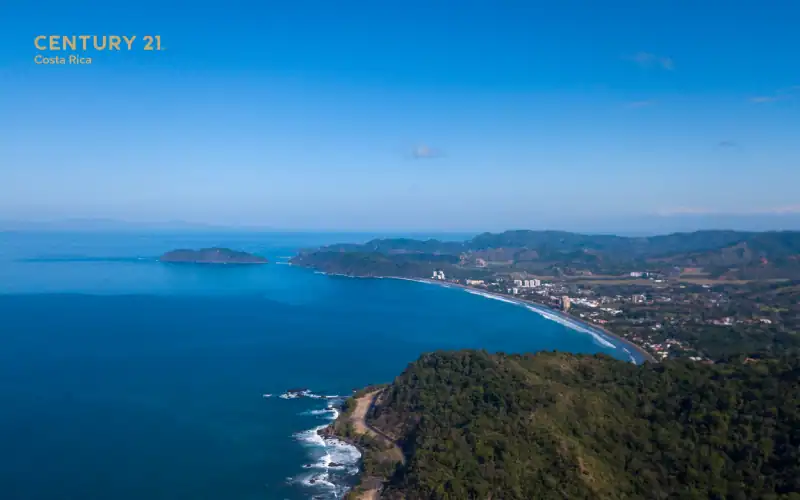
4. “Real Talk”: Guanacaste vs. Cost of Living
Thanks to feedback from expat communities on Reddit, we know the biggest “shock” for new investors is the operating expense in coastal areas.
- Electricity: In Guanacaste, A/C usage can drive your monthly bill to $150 – $300+. Coopeguanacaste applies tiered rates where the cost rises drastically after 200 kWh.
- Bubble or Boom?: While there is talk of high prices, the price per m² in Costa Rica remains competitive against markets like Florida or California, offering legal security that few countries in the region can match.
Financial Microclimates: Where does your money go further?
Not all regions in Costa Rica behave the same financially. In 2026, the market is divided as follows:
- Guanacaste (Nosara, Tamarindo, Papagayo): The Rental ROI (Return on Investment) for vacation rentals is the highest in the country (8% – 12% annually), but operating costs (electricity and salt-air maintenance) are 20% higher than the national average.
- Central Valley (Escazú, Santa Ana, Heredia): Absolute stability. This is a long-term rental market for executives. ROI is lower (6% – 7%), but maintenance costs are low, and the climate cuts electricity spending in half.
- Southern Zone (Dominical, Ojochal): The emerging market of 2026. Land prices are still competitive, but infrastructure (fiber optics and roads) is the key factor to review before buying.
5. The Protection Triangle: Escrow and Closing
To guarantee your money is safe, every transaction must go through an Escrow Agent registered with SUGEF.
- KYC (Know Your Customer): Prepare your proof of funds and bank statements. In 2026, due diligence is strict but necessary to prevent funds from being frozen.
Understand the difference between a Notary and an Escrow Agent in our article on Escrow and Corporations in Costa Rica.

Final Checklist for the 2026 Investor
- [ ] Did you verify the Folio Real and the municipal visado?
- [ ] Does the construction value exceed ₡143M?
- [ ] Are the first-quarter municipal payments up to date (March 31)?
- [ ] Is your Escrow agent registered with SUGEF?
- [ ] Did you budget the maintenance detailed in our Cost Guide?
Are you ready to take the next step with the security of Century 21? Our advisors don’t just sell properties; they manage your financial success in Costa Rica.