
Local Banks, Private Equity, or Seller Financing?
One of the biggest mistakes international investors make is assuming that the only way to acquire real estate in Costa Rica is through a cash deal. While cash transactions are fast, the 2026 financial market offers leverage options that allow you to maximize your Return on Investment (ROI) and maintain liquidity.
At Century 21 Costa Rica, we understand that financing is not just a necessity but a strategic tool. Below, we break down the three primary routes to finance your property, with a special emphasis on the trend transforming the market in Guanacaste and the Pacific coast: Seller Financing.
1. Local Banks: Traditional Security
The Costa Rican banking system has evolved. Today, both state-owned and private entities offer mortgage loans for non-residents, albeit with stricter requirements than those for locals and leading institutions such as BAC San José, Banco Promerica, and BCR offer mortgages for foreigners. As of 2026, rates are typically calculated based on the SOFR index plus a margin, resulting in interest rates ranging between 7.5% and 10% for those with residency (DIMEX) or local income.
- Profile: Ideal for those seeking the lowest interest rates in the market and who are not in a rush.
- LTV (Loan-to-Value): Generally financing between 60% and 70% of the appraised value.
- Terms: Up to 20 or 25 years.
- The Challenge: The bank’s due diligence process can take 45 to 90 days. An impeccable credit history from your home country (USA, Canada, or Europe) is required.
When considering a local bank for your loan, it is vital to ensure the institution is duly regulated by the General Superintendency of Financial Entities (SUGEF). This guarantees transparency and financial soundness for your transactions in Costa Rica.
2. Private Equity: Speed and Opportunity
In a market as competitive as 2026, speed is often more important than the interest rate. Private equity loans (or bridge loans) are essential for securing high-demand properties before another buyer takes them and Private Capital (internationally known as Hard Money Loans) is the go-to option for non-residents. In this case, approval does not depend on your income within Costa Rica, but rather on the collateral value. Expect short-term durations (2 to 5 years) and rates between 10% and 15%.
- Profile: Investors who need to close in less than 3 weeks or those planning to “fix and flip.”
- Rates: Usually higher (between 10% and 14% annually).
- Advantage: Documentation requirements are minimal compared to a bank; the collateral (the property) is the main focus.
3. Seller Financing: The 2026 “Ace Up Your Sleeve”
Owner financing has become the preferred option in high-growth areas like Tamarindo, Nosara, and Santa Ana. Why? Because it eliminates bank bureaucracy and allows for direct negotiations.
- How does it work? The seller acts as the bank. You pay an initial deposit (usually 30% to 50%), and the balance is paid in installments over a short period (3 to 5 years), often with a “balloon payment” at the end.
- Buyer Advantage: Immediate closing and no bank formalization costs.
- Seller Advantage: Receives monthly cash flow and an attractive interest rate on their money.
Century 21 Tip: This is the best way to buy a home in Costa Rica with seller financing, especially if you are waiting for the sale of another asset in your home country.
4. The Cross-Border Capital Strategy
Many of our clients at Century 21 choose not to seek funding within Costa Rica. Instead, they utilize a HELOC (Home Equity Line of Credit) or a mortgage against their assets in the US or Canada. This typically offers the lowest possible rates and allows for a cash closing in Costa Rica, providing significantly higher negotiating power.
Mortgage Financing Comparison in Costa Rica 2026
| Feature | Traditional Bank | Private Equity | Seller Financing |
| Closing Time | 60 – 90 days | 15 – 20 days | 7 – 15 days |
| Interest Rate | 8% – 9.5% (approx) | 10% – 14% | 7% – 9% (negotiable) |
| Down Payment | 30% – 40% | 50% | 30% – 50% |
| Flexibility | Low (Strict) | Medium | High |
Key Requirements for Your Financing
Regardless of the route you choose, to secure your mortgage in Costa Rica, you will need:
- Proof of Funds: Lawful origin of the down payment money.
- Credit Report: Recent and verified from your country of residence.
- Professional Appraisal: Conducted by an authorized surveyor (perito).
- Legal Structure: Deciding whether to buy as an individual or through a corporation (a topic we will cover in-depth in our upcoming article on asset protection and corporations).
Legal Safety Alert:
Particularly with private lending or Hard Money Loans, it is imperative that your attorney reviews the default clauses. Some private contracts may include foreclosure terms that are much more aggressive than traditional banking. At Century 21 Costa Rica, we work with specialized law firms to bulletproof every line of your loan agreement.
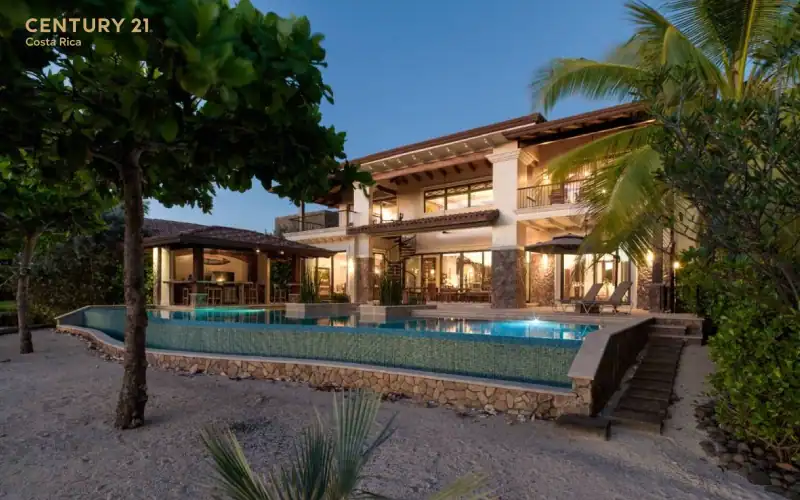
Which Financing option is best for you?
There is no one-size-fits-all solution. If your priority is the rate, the bank is your ally. If your priority is agility and capturing a unique opportunity on the coast, Seller Financing is the smartest path in 2026.
Do you want to know which properties in our inventory offer direct owner financing? Our Century 21 agents have access to exclusive opportunities that don’t always hit public portals.